


Ask any Trust leader what keeps them up at night and technology consistency will usually be somewhere on the list.
As a Multi Academy Trust grows, so does the complexity of running it. New schools bring new systems, new suppliers, and new ways of doing things. What starts as a handful of small local decisions can, over time, turn into a patchwork of different platforms, different policies, and different support arrangements across every school in the Trust.
It feels like freedom at first. Each school gets to choose what works for its own students and staff. But that freedom often comes at a hidden cost, and it's a cost that grows heavier the more schools you add.
The Hidden Cost of Doing Things Differently
When every school in a Trust runs its own version of a 1:1 technology programme, workload multiplies fast. IT teams end up supporting several device types, several operating systems, and several sets of parent facing processes, often with the same number of staff who were managing a single school's setup a few years earlier.
Communication becomes harder too. A parent moving a child between schools within the same Trust can face a completely different device policy, a different BYOD or CYOD portal, and a different payment process. Central teams struggle to report accurately on device numbers, costs, or safeguarding compliance because the data simply isn't structured the same way from school to school.
None of this happens because anyone made a bad decision. It happens gradually, as each school solves its own problem in isolation, without a shared framework to work within.
Why Multi Academy Trusts Are Choosing Consistency
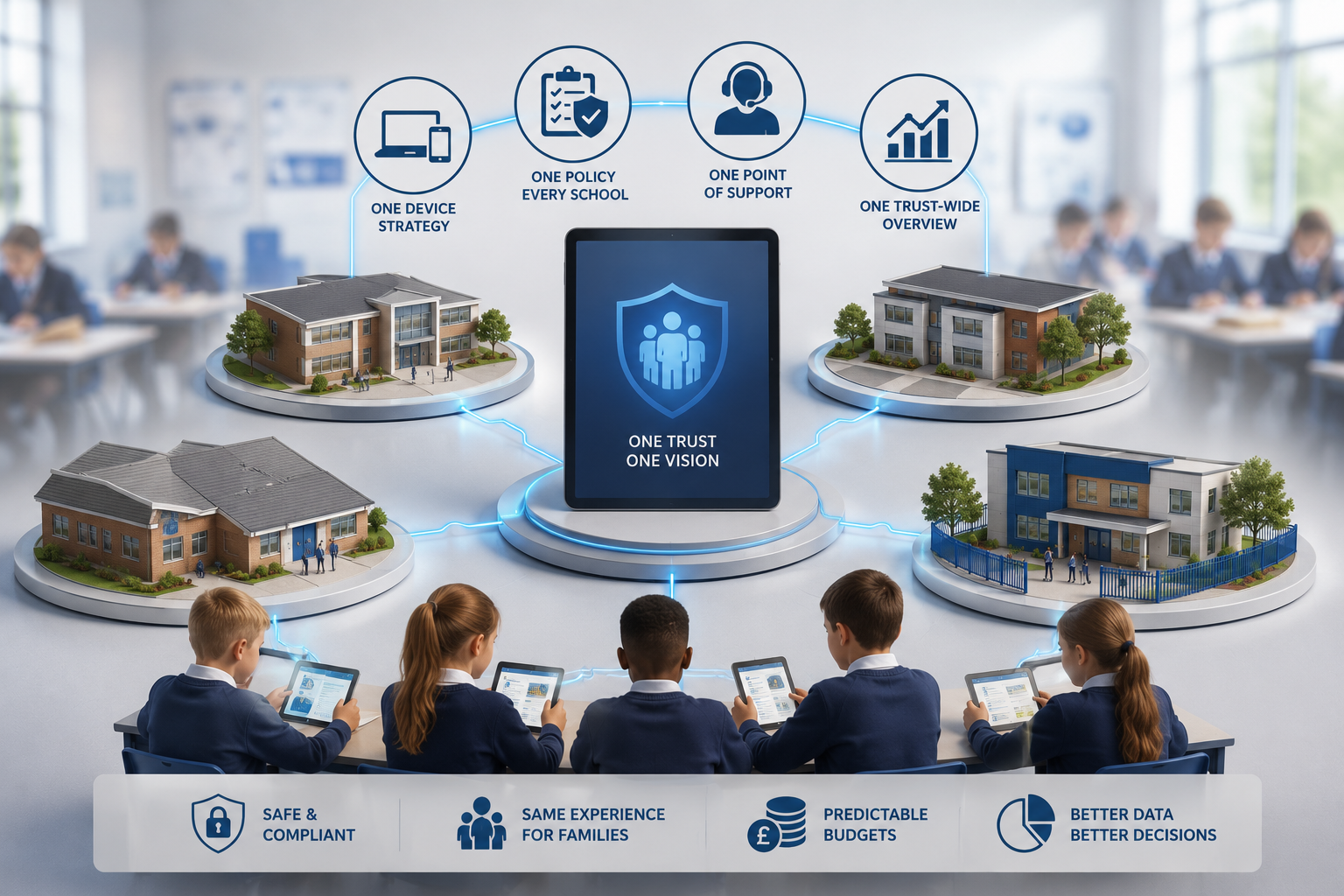
The Trusts that scale successfully tend to share one habit. They resist the urge to let every school build its own approach and instead invest in a shared structure that every school can plug into.
This isn't about forcing every school to look identical. It's about giving central teams, school leaders, and families a common language and a common process to rely on. A shared technology strategy means support can be delivered once and applied everywhere, rather than reinvented school by school.
Consistency also protects budgets. When device management, leasing, and insurance arrangements follow one framework across the Trust, forecasting becomes far more accurate, and economies of scale start working in the Trust's favour rather than being lost to fragmented, small scale purchasing.
The Edutech Zone Approach to Trust Wide Technology
At Edutech Zone, we work with MATs and independent schools across the UK to design 1:1 device programmes that stay consistent as the Trust grows. Our approach is built around four principles.
- One Portal, Every School. A single BYOD and CYOD portal gives every family across the Trust the same simple journey, whichever school their child attends.
- One Policy, Applied Fairly. Shared device, insurance, and support policies remove confusion and make sure every student is treated the same way, regardless of school size or history.
- One Point of Accountability. Central teams get a single point of contact for reporting, device tracking, and issue resolution, instead of chasing separate suppliers school by school.
- One Predictable Budget. Trust wide leasing and lifecycle planning turn scattered, unpredictable local spend into a single, forecastable line that finance teams can plan around with confidence.
What Consistency Looks Like in Practice
For families, it means the same clear device journey whether their child is starting at a small primary academy or a large secondary school within the Trust.
For school leaders, it means less time spent managing supplier relationships and more time focused on teaching and learning, because device management is handled centrally and consistently.
For Trust central teams, it means real, comparable data across every school, which makes reporting to trustees, governors, and auditors considerably more straightforward.
Consistency, in other words, isn't restrictive at all. It's enabling. It gives every school in the Trust the confidence that comes from shared structure, without taking away the ability to focus on what makes each school distinct in the classroom.
Independent Schools Benefit From the Same Thinking
This approach isn't only relevant to Trusts. Independent schools managing technology across multiple sites, or preparing to expand, face very similar challenges. A consistent 1:1 programme makes it easier to maintain a single standard of service for parents, simplify billing and support, and keep device policies aligned with the school's wider values and expectations.
Whether you're a Trust with twenty schools or an independent school group with three campuses, the underlying principle holds. Shared structure makes growth manageable.
Book a Free Trust Wide Technology Review
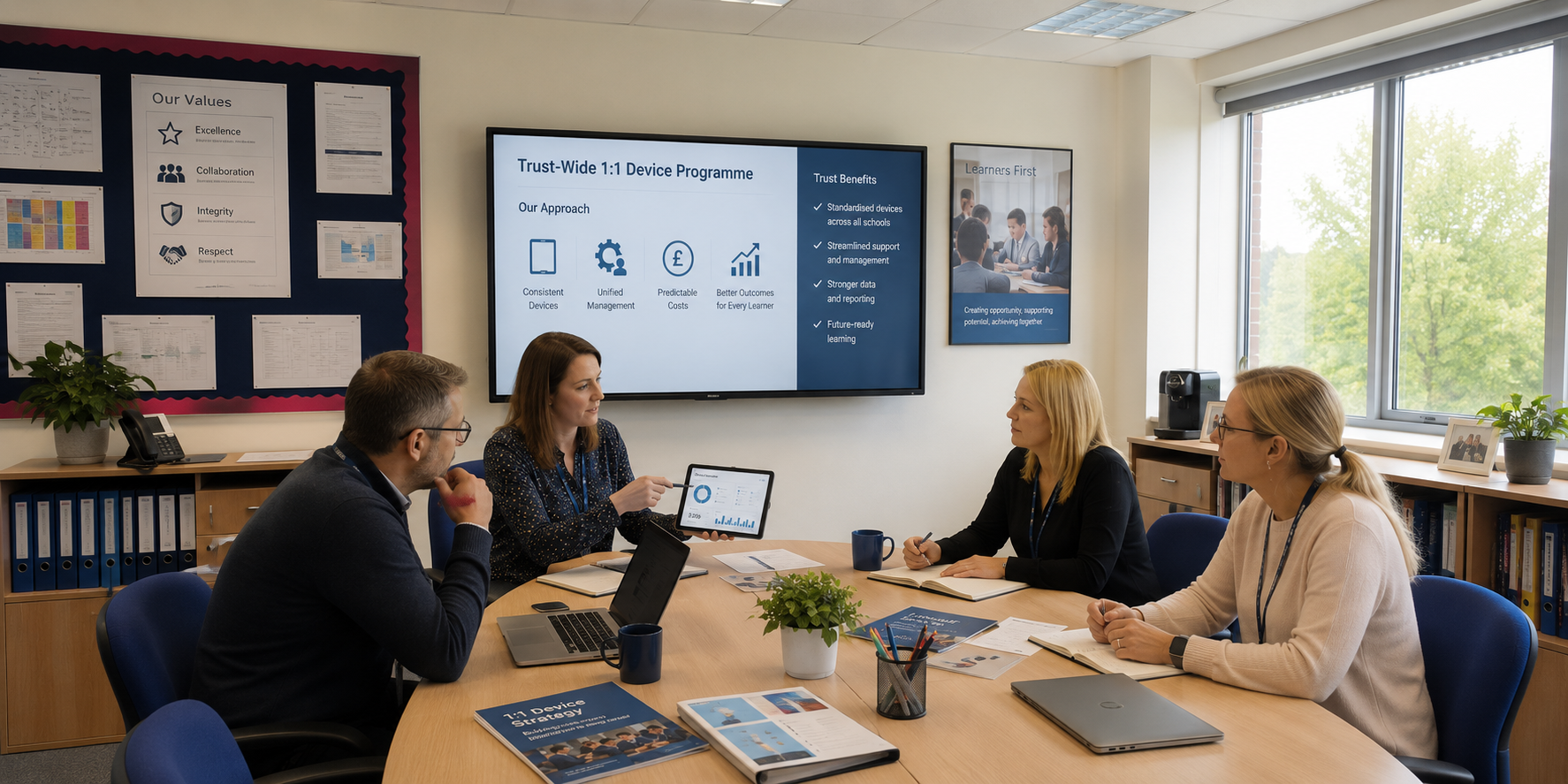
Every Trust and every school group reaches a different stage of this journey at a different time. Our specialists can review how your schools currently manage devices, BYOD and CYOD arrangements, and support, and identify where a more consistent, Trust wide approach could reduce workload and improve outcomes for staff and students alike.
Shared structure. Clearer support. Predictable outcomes.
Book your free Trust Wide Technology Review with Edutech Zone today.
Frequently Asked Questions
Why does consistency matter more than choice for a Multi Academy Trust?
When each school in a Trust makes its own technology decisions, workload, support, and reporting all become harder to manage as the Trust grows. A shared, consistent approach makes support clearer, communication easier, and outcomes more predictable across every school, without removing each school's ability to focus on its own students.
Does a consistent technology programme mean every school has to be identical?
No. Consistency applies to the underlying structure, such as device policy, BYOD and CYOD portals, and support processes. Individual schools within the Trust still retain their own identity and can focus on their specific teaching and learning priorities.
How does a shared 1:1 technology programme help Trust budgets?
A single framework for leasing, insurance, and device lifecycle planning across the Trust makes forecasting far more accurate and allows the Trust to benefit from economies of scale, rather than losing value to fragmented, school by school purchasing.
Is this approach only relevant to large Multi Academy Trusts?
Not at all. Independent schools managing multiple sites, or Trusts at an earlier stage of growth, benefit from the same principle. Shared structure makes it easier to maintain a consistent standard of service as a school group expands.
What happens during a free Trust Wide Technology Review?
One of our specialists reviews how your schools currently manage devices, BYOD and CYOD arrangements, and support, and identifies opportunities to bring greater consistency, reduce workload for central and school based teams, and build a more predictable Trust wide technology strategy.