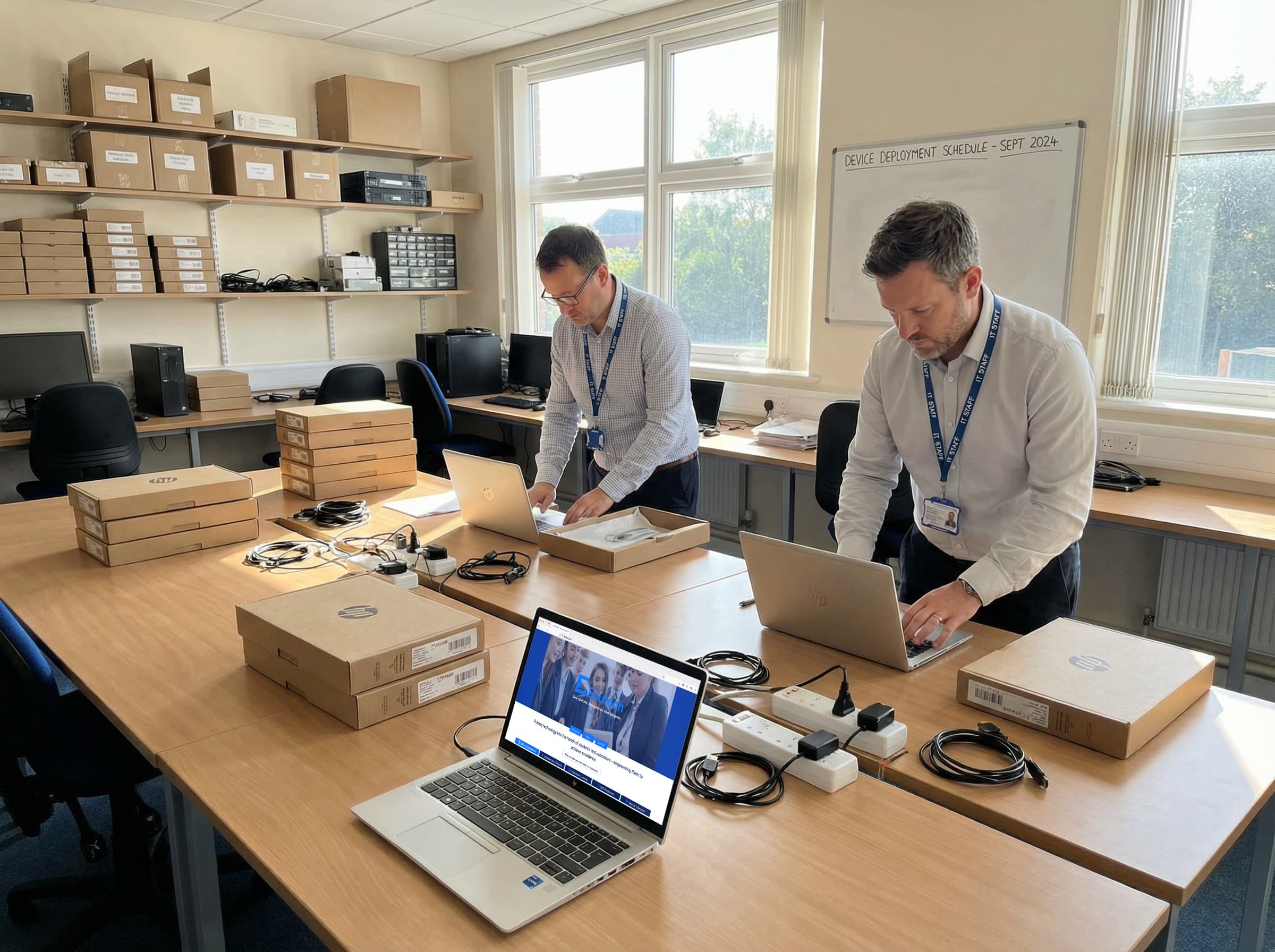


The most successful school technology systems are often the least talked about.
When a 1:1 device programme works well, people stop noticing it. Tasks get done, questions are answered, and issues are resolved without drama. That's the mark of good device management, not the absence of it.
Why Invisible Technology Is a Sign of Good Design
That invisibility is not a lack of value, it's a sign of good design. A well configured device, a smooth ordering process, or a repair handled quietly in the background all point to a technology strategy that's doing exactly what it should.
The systems that generate the most noise are usually the ones with the weakest foundations. The best school technology programmes rarely make headlines, because there's nothing going wrong for anyone to talk about.
Keeping the Focus on Learning, Not on Devices
In schools, where focus rightly belongs on learning, technology should sit quietly in the background, doing its job without demanding attention from teachers, pupils, or parents.
A 1:1 laptop programme that requires constant explanation, troubleshooting, or intervention has already fallen short of what schools should expect. The goal isn't to make technology visible, it's to make it dependable enough that nobody needs to think about it.
The Standard School Technology Should Meet
That's the standard school technology should meet, whether it's a single academy managing its own devices or a MAT coordinating a device scheme across several sites:
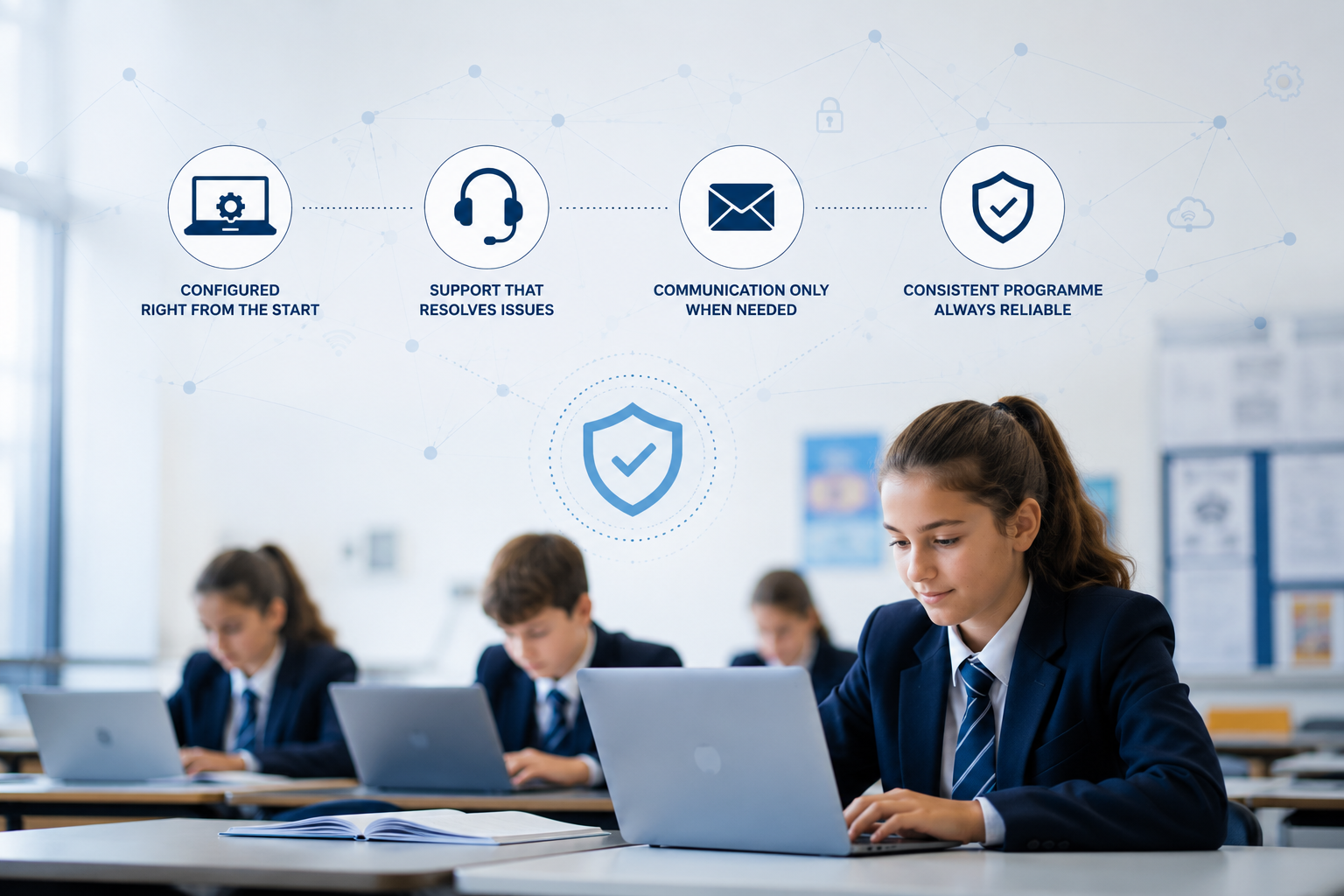
- Devices that are configured correctly from the start
- Support that resolves issues before they become disruptions
- Communication that only surfaces when it's genuinely needed
- A programme that stays consistent, whether it's being used or not being noticed at all
When these elements are in place, technology stops being a talking point and becomes part of the quiet infrastructure that lets teaching and learning happen without interruption.
Frequently Asked Questions
Why is unnoticed technology considered a good thing in schools?
When school technology works without drawing attention, it usually means devices are configured correctly, support issues are resolved quickly, and the underlying programme is well managed. Visibility often signals problems, while invisibility signals reliability.
What does good device management look like day to day?
Good device management means a 1:1 device programme runs smoothly in the background, with issues resolved before they disrupt teaching, and staff rarely needing to think about the technology itself.
How can schools tell if their technology strategy is working?
A working technology strategy usually shows up as an absence of complaints, disruptions, or repeated support requests, rather than through any single visible feature or announcement.
Does this principle apply to MATs as well as individual schools?
Yes. Whether it's one school managing its own 1:1 laptop programme or a MAT overseeing device schemes across multiple sites, the same standard applies: technology should support learning quietly, without becoming a distraction.
What should schools prioritise when choosing a technology partner?
Schools should prioritise partners who focus on consistent configuration, responsive support, and clear communication only when it's needed, rather than partners who rely on visible features or frequent check-ins to demonstrate value.